Biochar for Competence development for the Circular Carbon eConomy

Facilitating a Local CCE Development Project
in Edertal County (blinc)
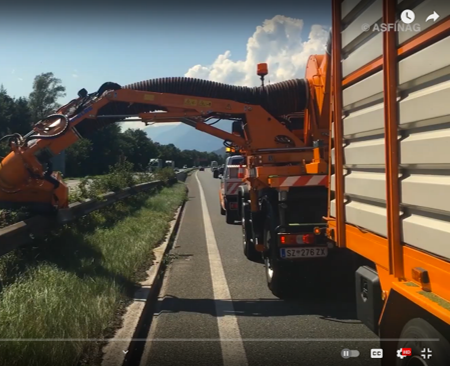
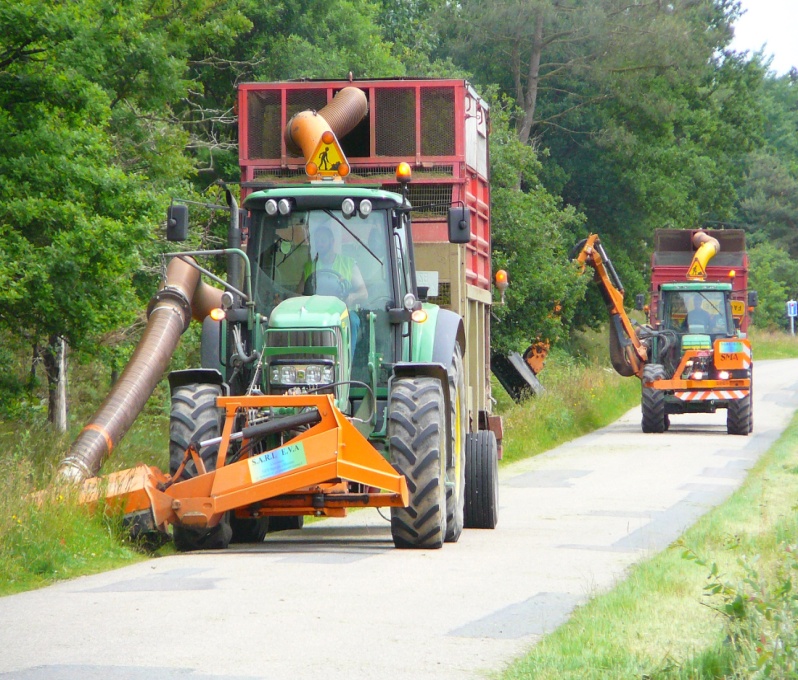
Stakeholders from local authorities, environmental organisations and civil society collaborated to explore how roadside biomass and woody residues could contribute to regional climate protection. Through Design Thinking, biomass assessments and carbon management tools, participants developed evidence-based implementation scenarios for biochar production and regional Circular Carbon Economy development.
- Challenge
- Approach
- Activities
- Results
- Impact
This pilot addressed a highly transferable scenario in which committed citizens, environmental organisations, local authorities, and technical experts work together to promote environmental and climate protection at the regional level.
The project focused on a region in northern Hesse, where members of environmental organisations and district administration had been collaborating for approximately 1.5 years to develop a concept for the utilisation of biomass from roadside verges. The initiative aimed to address several interconnected challenges:
• Developing a local authority programme for the ecological management of grassland areas that require regular mowing and removal of cut biomass
• Exploring opportunities for the utilisation of biomass from roadside vegetation
• Enhancing biodiversity, which was a key objective of participating environmental organisations
• Identifying funding opportunities for mowing activities, an important concern for municipal climate managers
• Assessing the potential contribution of biochar and Circular Carbon Economy (CCE) approaches to regional climate protection strategies
The B4C project was used as a framework to introduce knowledge on biochar and CCE concepts while supporting local project development through Design Thinking methods. A central challenge was the complexity of biomass utilisation systems, which require specialised technologies and organisational structures, while financial resources within municipalities are often limited.
The overall objective was therefore defined as conducting a regional potential analysis that could serve as a basis for decision-making by local authorities and policymakers.
An interdisciplinary stakeholder group had already been working together for approximately 1.5 years to support sustainable regional development and to strengthen applications for environmental funding programmes.
The pilot combined knowledge transfer on biochar and Circular Carbon Economy concepts with participatory innovation methods. The learning process was designed to help participants understand the technical, environmental, and organisational dimensions of regional carbon management while collaboratively developing realistic implementation scenarios.
Following introductory learning activities, Design Thinking methods were used to support concept development, stakeholder engagement, and the identification of feasible implementation pathways.
The pilot combined online learning, collaborative workshops, practical site visits, and regional potential analysis.
Key activities included:
- Three synchronous online learning sessions supported by materials and courses available on the learning platform
- Knowledge transfer on biochar, carbon sequestration, and Circular Carbon Economy concepts
- Three Design Thinking workshops conducted between autumn 2025 and spring 2026
- Development of regional carbon management scenarios and implementation concepts
- Stakeholder mapping and analysis
To complement the theoretical learning, several practical activities were organised:
- An excursion to pyrolysis facilities in Witzenhausen and Zierenberg in the Kassel region
- Visits to applied research projects related to biochar production and biomass utilisation
- Participation of local stakeholders in the international B4C conference
- An additional field trip to a regional pyrolysis project
Participants also used the Carbon Management Tool to assess regional carbon sequestration potential and support evidence-based scenario development.
Throughout the project, discussions highlighted several practical challenges:
- Limited financial resources available to municipalities
- The complexity of implementing large-scale biomass utilisation systems
- Long approval procedures for pyrolysis facilities processing more than 2,000 tonnes of biomass annually, which currently require approximately five years
- Lower-than-expected participation of local councillors in practical activities, likely due to the timing of local elections
To address these challenges, the project concluded with a detailed assessment of municipal biomass resources and utilisation potential within the district.
The pilot generated a comprehensive decision-making basis for regional carbon management and biochar implementation.
The biomass potential analysis demonstrated that sufficient biomass resources are available within the district to support future biochar production projects. Stakeholder analysis further indicated that the existing regional network is well positioned to implement such initiatives.
Two implementation scenarios were developed and assessed.
Scenario 1: Roadside Vegetation
The analysis showed that utilising only 50% of the biomass generated from roadside vegetation could result in the sequestration of approximately 1,500 tonnes of CO₂ equivalents per year. This would represent a substantial contribution to the district’s climate protection objectives.
Scenario 2: Woody Biomass
The biomass inventory identified more than 800 tonnes of dry woody biomass annually, corresponding to a sequestration potential of approximately 600 tonnes of CO₂ per year.
Economic considerations
Scenario 1 requires biomass pre-treatment and a comparatively complex technical setup. As a result, implementation costs are estimated to be approximately 20% higher than those of Scenario 2.
Environmental value
Scenario 1 offers additional environmental benefits beyond carbon sequestration, particularly through biodiversity enhancement and improved ecological management of roadside vegetation.
Technical feasibility
Scenario 2 was assessed as the more straightforward option from a technical perspective. Standard industrial pyrolysis systems are generally optimised for wood chips, and the homogeneous feedstock enables reproducible biochar quality, which is particularly important for EBC certification.
In contrast, Scenario 1 would require IFBB pre-treatment processes, access to surplus water, and opportunities to utilise the resulting press juice, for example through wastewater treatment infrastructure or agricultural slurry systems.
The project demonstrated how biochar and Circular Carbon Economy approaches can be integrated into regional development processes through a combination of stakeholder engagement, knowledge transfer, practical learning, and structured innovation methods.
The developed scenarios and biomass potential assessments provide a concrete basis for future decision-making by municipalities and policymakers. Following the local elections, the concepts can be further discussed and refined as part of the region’s ongoing sustainability and climate protection efforts.
The Edertal development process therefore delivered practical value by transforming a complex regional challenge into evidence-based implementation options for local authorities.
Application scenario: Regional Carbon Management and Multiple Biochar Applications
The project assessed regional biomass resources and developed implementation pathways for biochar production and utilisation.
Estimated carbon handprint: The analysis identified a potential sequestration of approximately 1,500 tonnes CO₂e per year from roadside vegetation and an additional 600 tonnes CO₂e per year from woody biomass streams.
Co-benefits:
- Biodiversity enhancement through ecological roadside management
- Regional value creation
- Reduced biomass disposal costs
- New employment opportunities
- Evidence-based climate policy development