Biochar for Competence development for the Circular Carbon eConomy

Climate farming (blinc)
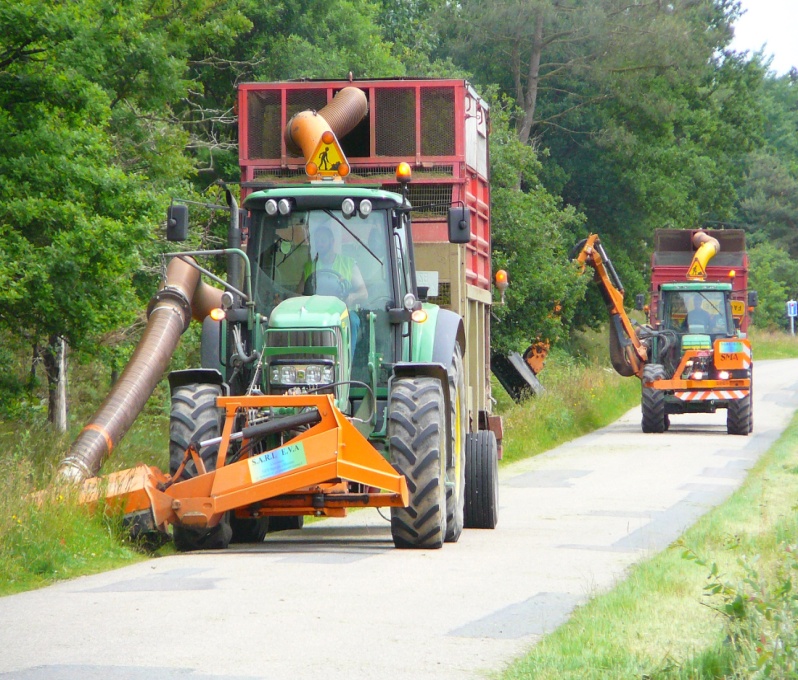
The Climate Farming pilot explored practical and economically feasible biochar solutions for climate-resilient agriculture. Participants assessed biomass resources, evaluated conversion technologies and developed concepts for biochar production, water retention, co-composting and carbon sequestration. The project demonstrated how farms can combine climate protection, renewable energy generation and sustainable resource management.
- Challenge
- Approach
- Activities
- Results
- Impact
The pilot addressed a highly transferable challenge faced by many farms: how to become more climate-friendly and resilient while relying on affordable and practical solutions.
The introduction of biochar-based agricultural applications is often constrained by financial limitations, missing or insufficiently competitive technologies, and lengthy approval procedures for large-scale technical solutions. These barriers make it difficult for farms to implement innovative carbon management approaches.
An additional challenge was the assessment of climate-related impacts and ecological co-benefits. Reliable methods were needed to evaluate carbon sequestration potential as well as the broader environmental value of biochar-based farming systems.
The project focused on the development of adapted technologies that could be implemented under realistic farm conditions.
Building on previous work, an initial group had already identified a range of low-tech and high-tech biochar production and application options while also recognising the trade-offs associated with different approaches. Participants used training materials and online courses provided through the learning platform and benefited from expert workshops that supported joint learning and concept development.
The learning and development process concentrated on identifying technically feasible and economically realistic solutions for climate-resilient farming. Particular attention was given to biochar quality requirements and conversion technologies that could be implemented at medium investment levels.
Between March and June 2026, the core working group met regularly to develop and refine concepts for biochar-based farming applications.
The project combined knowledge transfer, expert exchange, practical site visits, and collaborative concept development.
Key activities included:
- Participation in eight synchronous online working sessions
- Use of learning materials and courses provided on the platform
- Expert workshops on biochar technologies and climate farming approaches
- Three Design Thinking workshops conducted between April and June 2026
- Development of concepts for “Adapted Technologies for Climate-Resilient Farming with Biochar-Based Solutions”
To connect theory with practice, participants visited several operational facilities and demonstration sites:
- A prototype pyrolysis plant in Eichenberg
- A commercial pyrolysis plant in Zierenberg
- The Climate Farm in Kassel County
- Additional visits to regional pyrolysis projects in Witzenhausen and Zierenberg
Participants also benefited from expert input provided through the THREE C network and engaged with international stakeholders during project activities.
During the Design Thinking phase, the working group developed and assessed a range of practical biochar applications, including:
- Biochar-based substrates for water retention and infiltration
- Odour reduction applications
- Soil improvement through co-composting
- Different biochar production scenarios suitable for farm-level implementation
The project team also analysed the availability of green waste and woody biomass in the vicinity of the farm and assessed the carbon sequestration potential using the Carbon Management Tool.
The Climate Farm project successfully developed a pilot concept that addressed potential implementation conflicts at an early stage and focused on solutions that are both technically feasible and economically realistic.
The analysis showed that sufficient green waste and woody biomass are available locally to operate a medium-sized pyrolysis plant. The developed application scenarios demonstrated that biochar-based solutions can be integrated into existing farming systems while contributing to climate resilience and resource efficiency.
Key outcomes included:
- Development of feasible farm-level biochar production and utilisation concepts
- Identification of suitable biochar substrates for multiple agricultural applications
- Assessment of local biomass availability for future implementation
- Calculation of carbon sequestration potential using the Carbon Management Tool
- Strengthened cooperation between practitioners, researchers, and international experts
One particularly relevant finding was that the proposed conversion system could supply approximately 50% of the farmhouse heat demand through recovered process heat while simultaneously producing around 10 tonnes of biochar annually for agricultural applications.
The project also established opportunities for future cooperation with the University of Kassel, including laboratory analysis of produced biochar and long-term monitoring activities. In addition, the results provide a basis for dissemination through the European Climate Farming Network and future vocational education and training projects in the agricultural sector.
Overall, the pilot demonstrated that adapted biochar technologies can offer practical pathways towards climate-resilient farming by combining carbon sequestration, renewable energy generation, and sustainable resource management.
The project explored integrated biochar production and application systems for climate-resilient farms, combining carbon sequestration, renewable energy and sustainable soil management.
Estimated carbon handprint: The proposed farm-scale system could produce approximately 10 tonnes biochar annually, corresponding to around 30 tonnes CO₂e sequestration per year.
Co-benefits:
- Improved soil fertility
- Increased drought resilience
- Enhanced nutrient retention
- Reduced odours and emissions
- Renewable heat generation covering up to 50% of farmhouse demand0