Biochar for Competence development for the Circular Carbon eConomy

Biochar Urban Garden Booster (FUU)
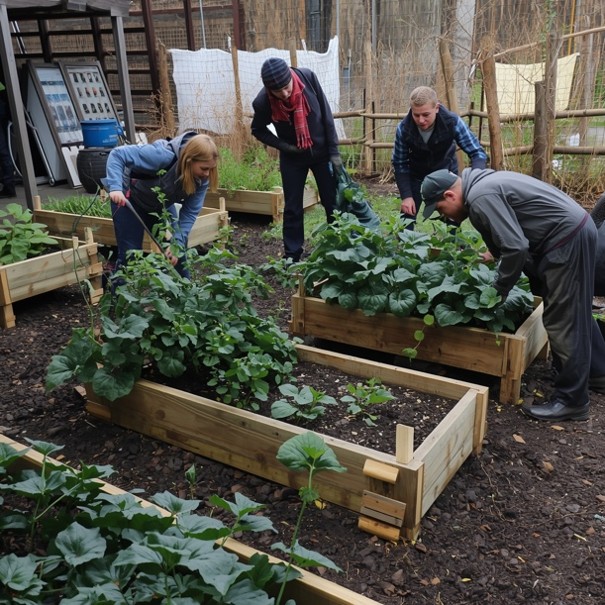
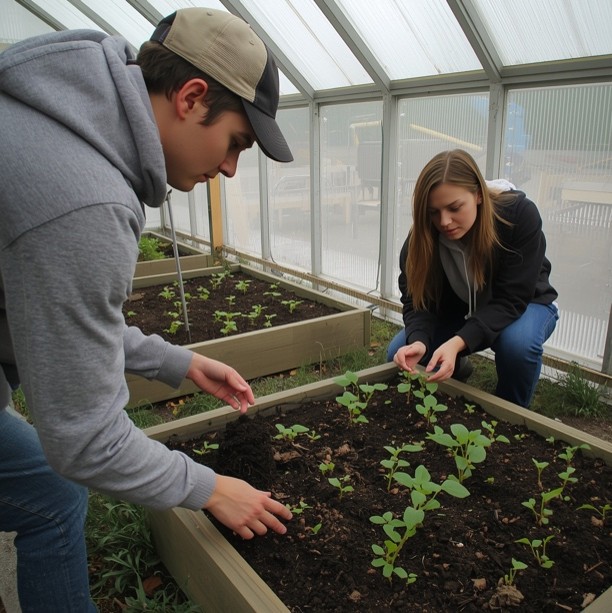
The Biochar Urban Garden Booster was a pilot project led by Folkuniversitetet (FUU) that engaged adult vocational gardening students in a hands-on micro-experiment. Participants set up paired garden plots—one with biochar and a control plot without—in urban settings such as community plots, school gardens, and rooftop planters.
Throughout the project, learners actively monitored the plots, measuring soil moisture, plant height, and leaf health.
They ultimately compiled their findings into a comparative dataset, which demonstrated that the biochar-amended soil retained moisture more effectively than the untreated soil.
The primary goal of the pilot was to provide an accessible, practical entry point into complex topics like the Circular Carbon Economy, carbon sequestration, and soil science.
By connecting everyday horticultural practices with systemic sustainability thinking, the project successfully improved the students’ scientific literacy and changed how they viewed soil and organic waste.
- Challenge
- Approach
- Activities
- Results
- Impact
Many adult learners participating in gardening courses are highly interested in growing plants and managing urban gardens but have limited exposure to sustainability concepts such as carbon sequestration and Circular Carbon Economy. Biochar was largely unknown to participants and often perceived as a scientific topic disconnected from everyday gardening practice.
The challenge was therefore to make the relationship between gardening, soil management, and climate action tangible and relevant by connecting practical horticultural activities with broader environmental objectives.
The pilot was designed as a hands-on learning experience that combined introductory knowledge with practical experimentation. The aim was to enable participants to explore the effects of biochar directly within a real gardening context rather than through theoretical instruction alone.
The learning process began with a visual introduction to biochar, including its production, properties, and role in the carbon cycle. Examples from urban gardening were used to demonstrate potential applications and encourage discussion.
Participants established comparative garden plots in pairs. One section of each plot was amended with biochar, while the other served as a reference plot without biochar.
The practical activities included:
- Preparing and planting experimental garden plots
- Incorporating biochar into selected soil areas
- Formulating hypotheses regarding potential effects on plant growth and soil conditions
- Monitoring and recording observations throughout the growing period
- Measuring and comparing soil moisture levels
- Collecting and analysing data from treated and untreated plots
Throughout the pilot, participants discussed observations, reflected on unexpected results, and explored factors influencing the outcomes. Variations in plot management and environmental conditions provided valuable opportunities to understand the challenges and uncertainties associated with real-world experimentation.
The pilot successfully demonstrated how biochar-related sustainability concepts can be integrated into practical gardening education.
Key outcomes included:
- Increased understanding of biochar and its role in climate action
- Hands-on experience with experimental methods and data collection
- Development of a comparative dataset showing improved moisture retention in biochar-amended soils
- Greater awareness of the connections between soil management, water cycles, carbon storage, and sustainable gardening practices
Beyond the technical findings, participants developed a broader perspective on the environmental significance of gardening. The project showed that practical, experience-based learning can make complex sustainability topics accessible and meaningful for adult learners while encouraging critical thinking and environmental awareness.
The impact of the biochar to construction material refers to the CCE application scenario: