Biochar for Competence development for the Circular Carbon eConomy

Exploring Biochar in Earthen Building Materials (blinc)
This pilot investigated the use of biochar in This pilot investigated the use of biochar in clay-based construction materials. Participants experimented with different biochar-clay formulations, produced demonstration surfaces and tested natural additives such as hemp fibres. The project combined craftsmanship, sustainability education and material innovation to explore carbon-storing building materials and healthy indoor environments.
Participants experimented with different biochar-clay formulations, produced demonstration surfaces and tested natural additives such as hemp fibres. The project combined craftsmanship, sustainability education and material innovation to explore carbon-storing building materials and healthy indoor environments.
- Challenge
- Approach
- Activities
- Results
- Impact
Can building materials contribute to climate protection while creating healthy and sustainable indoor environments?
This question formed the starting point of the pilot project on biochar in earthen construction. The project explored how biochar could be integrated into traditional clay-based building materials and how this emerging field could be made accessible through practical learning experiences for professionals and learners.
The project combined material experimentation, practical craftsmanship, and sustainability education. Working together with experienced craftspeople, the project team explored different formulations of clay plaster and biochar to better understand their properties, handling characteristics, appearance, and potential applications.
The approach aimed to connect current developments in sustainable construction with hands-on learning opportunities, enabling participants to engage directly with innovative carbon-storing building materials.
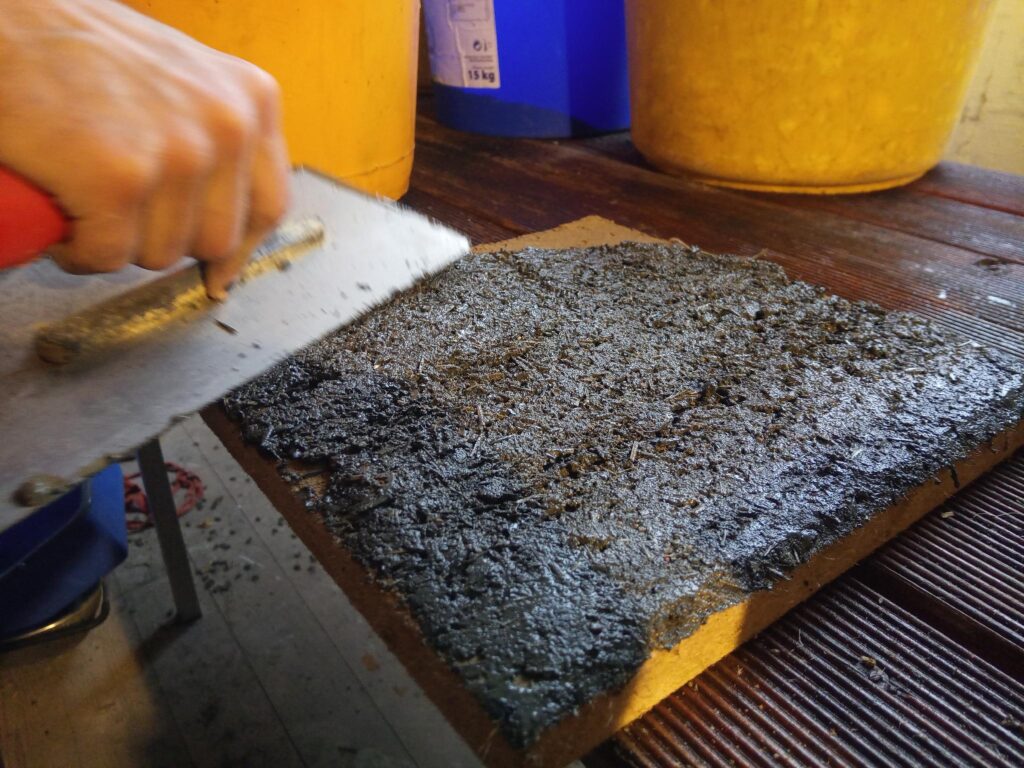
The project involved the development and testing of various biochar-clay plaster mixtures. Experimental formulations were prepared and evaluated before being applied as interior wall finishes in an office building.
These demonstration surfaces provided an opportunity to observe and compare different material compositions in a real-world setting and now serve as educational resources for learners, professionals, and interested visitors.
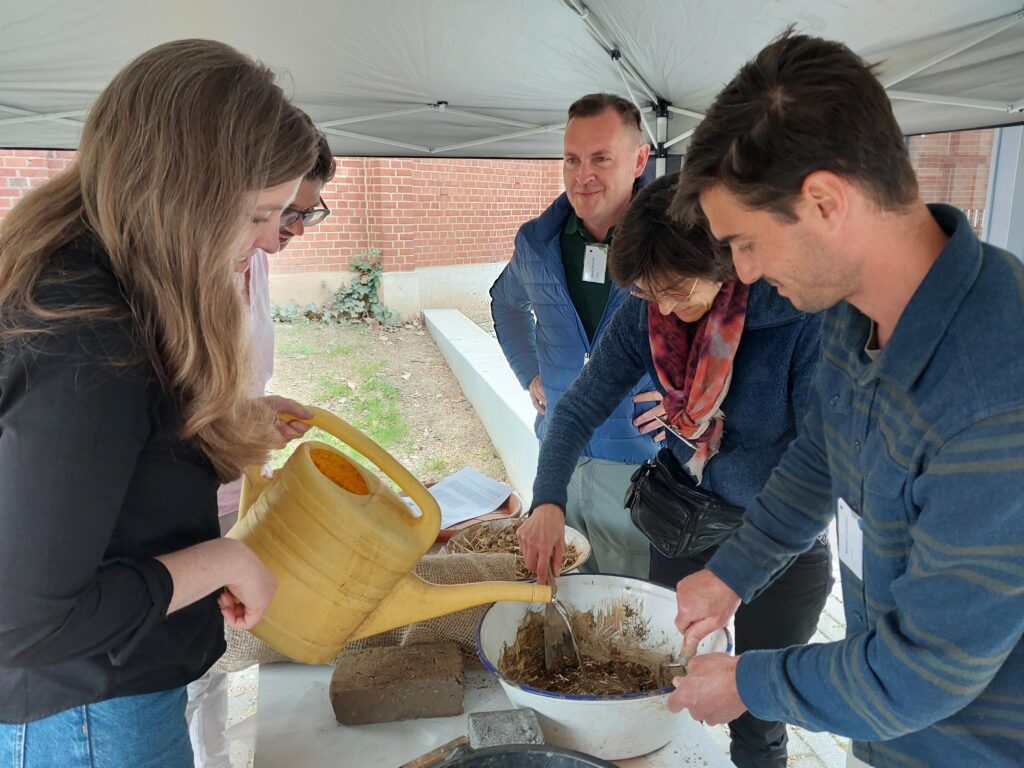
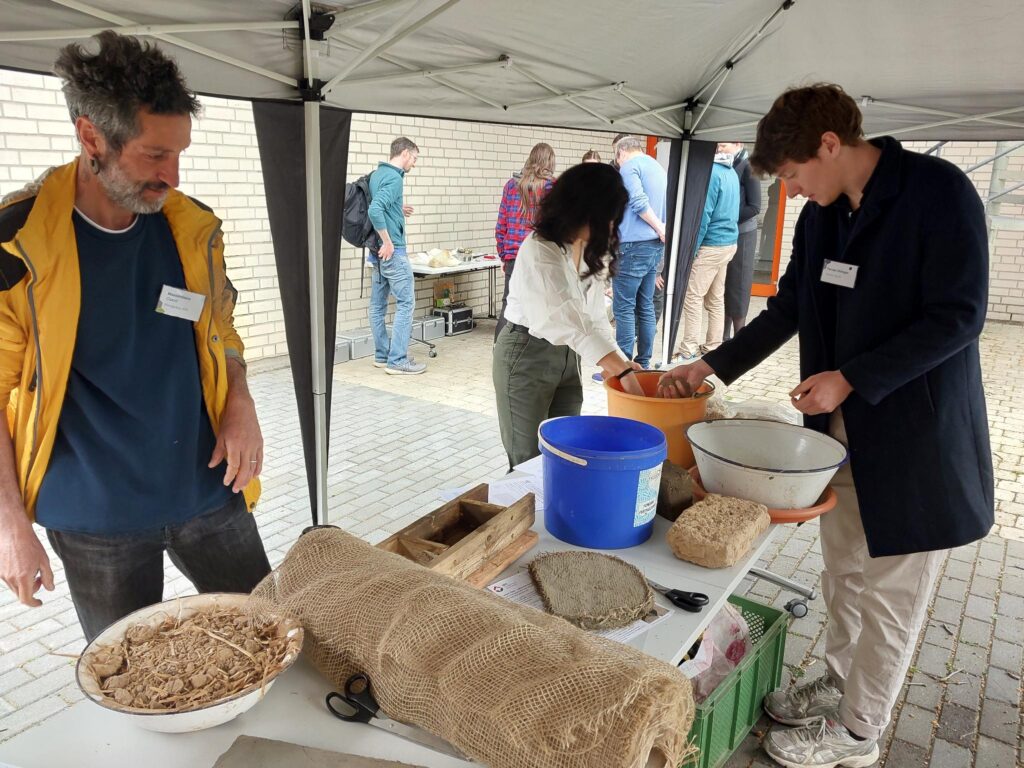
A second key activity took place during the THREE C Network Conference 2026 in Kassel. Participants were invited to explore biochar-clay composites through practical experimentation. Activities included:
- Mixing clay and biochar
- Testing different material formulations
- Incorporating natural additives such as hemp fibres and hemp shives
- Producing small earthen boards and bricks
- Discussing current research and applications of biochar-clay composites
The workshop encouraged participants from different professional backgrounds to exchange perspectives on sustainable construction, climate mitigation, and the implementation of innovative materials.
The project demonstrated the potential of biochar as a component of sustainable earthen construction materials and highlighted the value of hands-on experimentation for vocational learning.
Key outcomes included:
- Development and testing of biochar-clay plaster formulations
- Creation of demonstration surfaces in a real building environment
- Increased awareness of carbon-storing building materials
- Practical experience with biochar-based construction techniques
- Exchange of knowledge between craftspeople, educators, researchers, and practitioners
The pilot showed that experimentation, craftsmanship, and sustainability education can effectively complement each other. It also demonstrated that topics such as Circular Carbon Economy and carbon storage become more accessible when learners can work directly with materials and explore their practical applications. The project provides a foundation for further development of biochar-based construction materials and future learning activities in sustainable building practices.